Adventures In Group Trust and Meaning
My passion for coaching and facilitating groups stems from witnessing profound insights emerge when people work through a challenging experience in a trusting, open environment. By reflecting on shared experiences and speaking with vulnerability, the group weaves deep insights into meaningful connections that endure long after the experience is over.
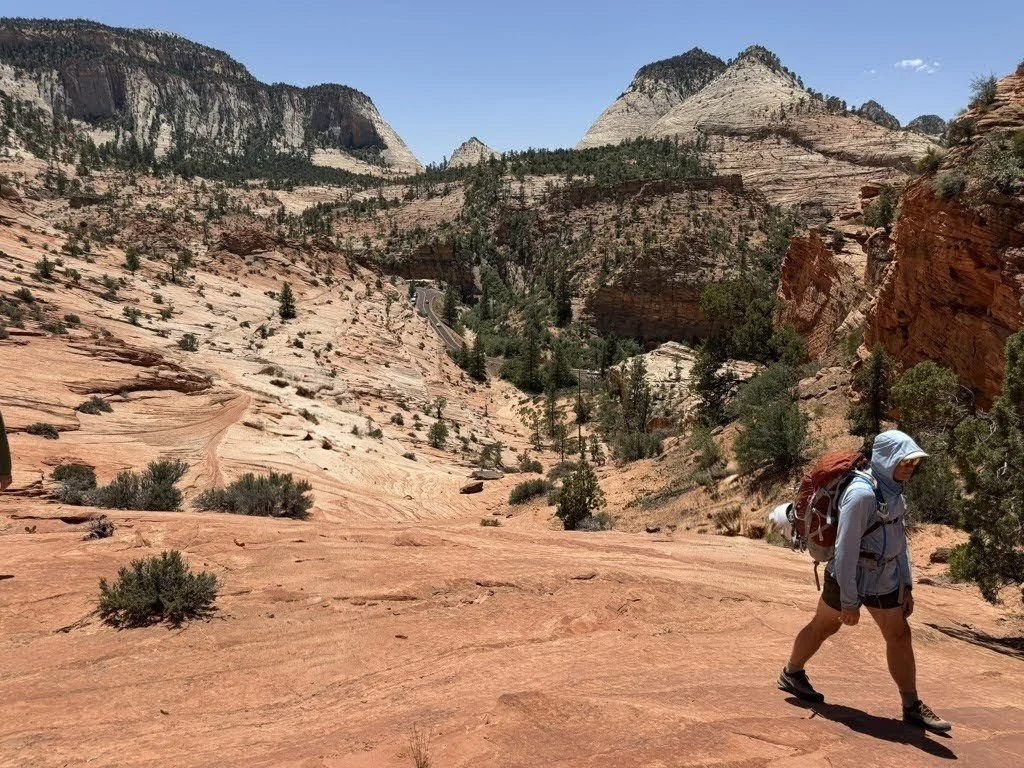
Recently, I led a few canyoneering trips in Zion National Park in Utah, USA. Canyoneering demands a multi-functional skillset of hiking, route-finding, boulder hopping, rock scrambling, down climbing, rope and harness work, swimming, sequencing people, efficient movement, and general backcountry wilderness safety. I was with dear friends and throughout the experience I facilitated group work as an offering of my purpose-level gifts.
Much like canyoneering, my approach to group coaching requires a multi-functional skillset, specialized tools, and adaptable strategies. Reflecting on our recent trips, one takeaway stands out: without an underlying foundation of trust, calm, and psychological safety, the claustrophobic nature of a slot canyon towering with sandstone can easily trigger panic and fear (which leads to significantly higher risk of physical safety). This was especially true for the beginners in our group who had never worn a harness or rappelled before. As I consider what kept us safe and successful, I realize those same protective elements are exactly what allow a facilitated group to navigate challenging terrain.
The Approach
Tend to Safety
Safety is the absolute pre-condition for any meaningful experience. In a wilderness adventure, especially one with high inherent risks, physical safety requires constant tending, checking of gear/setup, and open communication. The exact same principle applies when facilitating and coaching groups: participants need psychological and interpersonal safety. They must feel free to take risks and share deeply without fear of judgment or rejection. While a sense of self security often comes with maturity, the group can cultivate it by fostering reciprocity and ensuring the group understands that vulnerability will be met with empathy, support, and celebration continually.
Go Slow
By the time people arrive in a group space, they have already undertaken a significant journey. They may have traveled from afar, rushed through a packed day, or spent hours preparing logistically. The secret is to welcome them into the circle (a literal talking circle or a figurative group space) in a way that breaks linear time. Helping people transition from getting there to being there is essential for a successful container. Create a threshold crossing by clearly marking a change in pace through intentional silence, group breathing, a mindfulness practice, poetry, opening sacred space, or invoking something larger than ourselves. This sets the container for something profoundly meaningful to take shape. Slow right down, even more than you think is necessary. Take the time required to bring everyone together into the timelessness of community.
Challenge and Support
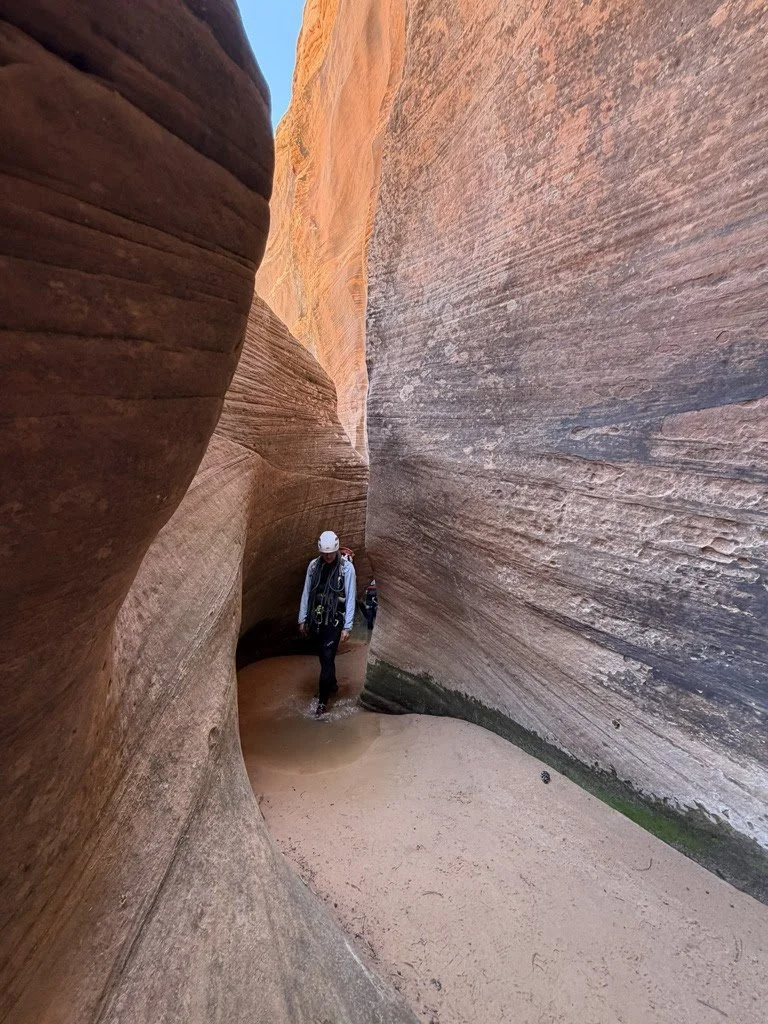
For transformation to occur, a group needs both challenge and support. The trick as a facilitator is to help hold people right at the edge of their own expansion, carefully titrating challenge and support. In a technical slot canyon, the environment itself becomes the challenger, carrying inherent risk and high stakes. Water carved these canyons over millions of years, and perhaps water is the only thing that can gracefully wind through canyons like these. For the 2-legged, 5-fingered ones, it’s an awkward and difficult challenge to make it through!
Because the canyon provides the friction, attention can shift more toward support. This is the sweet spot where trying new things, failing, adapting, and succeeding becomes possible. Overcoming these natural hurdles leads to deep personal growth, self resilience, and a shared sense of purpose. While the group coach holds the space, the participants naturally step into the supportive role calling out each other's strengths, celebrating small wins, and validating the journey together.
Intention and Attention
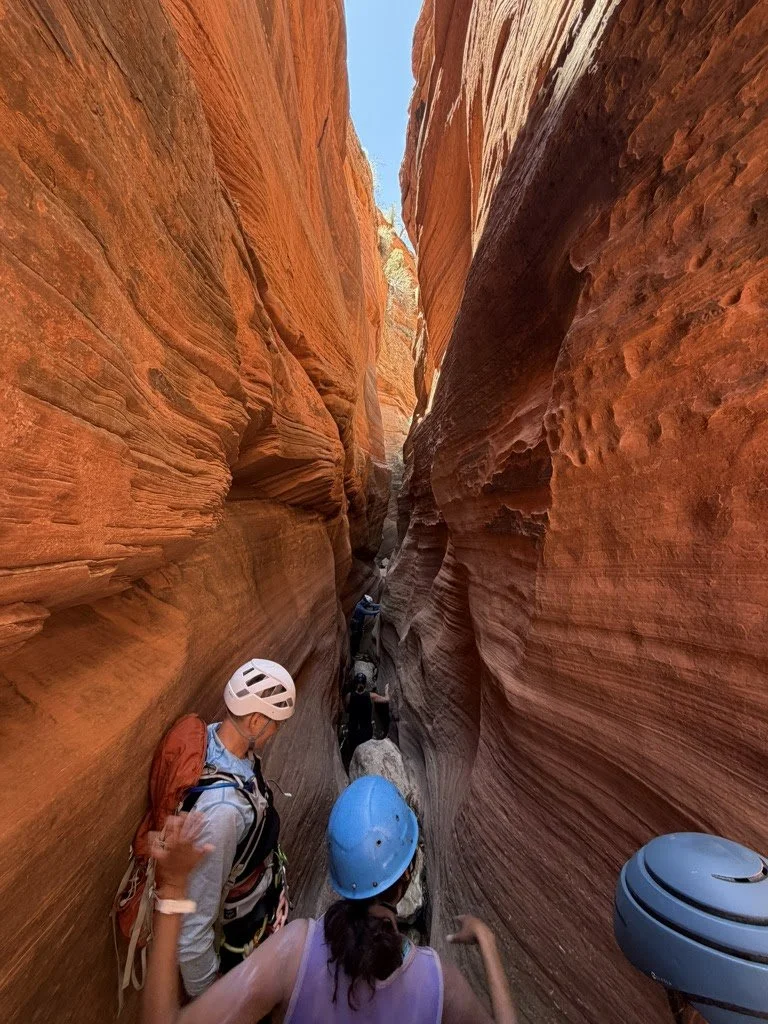
Bring intentional attention to the experience itself. Because we put so much emphasis on logistics, planning, and preparation, we often carry that action-oriented energy directly into the experience. There is no inherent problem with that, after all, we gathered here to do something together. The secret is balancing our doing with our being. Start by inviting people to name their intention for the experience in the group. Continue by inviting everyone to notice details while in the experience, and to point out to others what they are noticing in the canyon and inside themselves.
When we actively pull ourselves out of autopilot and anchor into the present moment, we stop merely executing the steps of the experience and start living in the experience itself. This shift involves slowing down, becoming aware of the subtle details, and harvesting deeper meaning from the journey. The same thing applies to coaching groups, getting people to be still and notice what’s happening in the moment opens up new levels of insight.
Invite people to open and use all of their senses, to notice what mix of emotions are arising, and to reflect on what it all means. This allows everyone to move from a state of automatic doing to one of profound presence. It transforms a series of activities into a shared, unforgettable, and meaningful experience.
Make It Fun
Humor belongs in the circle. It is a powerful tool that helps us find the joy of the moment, even when the work gets difficult, awkward, or uncomfortable. Laughter invites us to show up unedited and to stop taking ourselves so seriously, fostering an atmosphere of mutual understanding and good humor. Throughout any meaningful journey, it’s necessary for the group to ride an ebb and flow of energy, shifting from moments of serious, quiet focus to bursts of spontaneous play. Hard things can, and should, be fun. When we reframe a difficult topic or challenging obstacle as a shared puzzle, it transforms into the exact type of novel play our brains crave.
The group coach is the conscious weather vane for this energy, pointing to when it is time for gravity and when it is time to lighten the load. This requires deep presence and active listening. If you sense the group tightening up with anxiety before a difficult task, slowing down and dropping in a moment of levity can break the tension and restore their confidence. Conversely, if the energy becomes too scattered or chaotic during a critical moment, gently steer the group back to a grounded, focused stance. By intentionally modulating the atmosphere, the group experiences safety and seriousness coexisting with joy, making the entire container feel both profoundly secure and wildly alive.
Balance Exposure
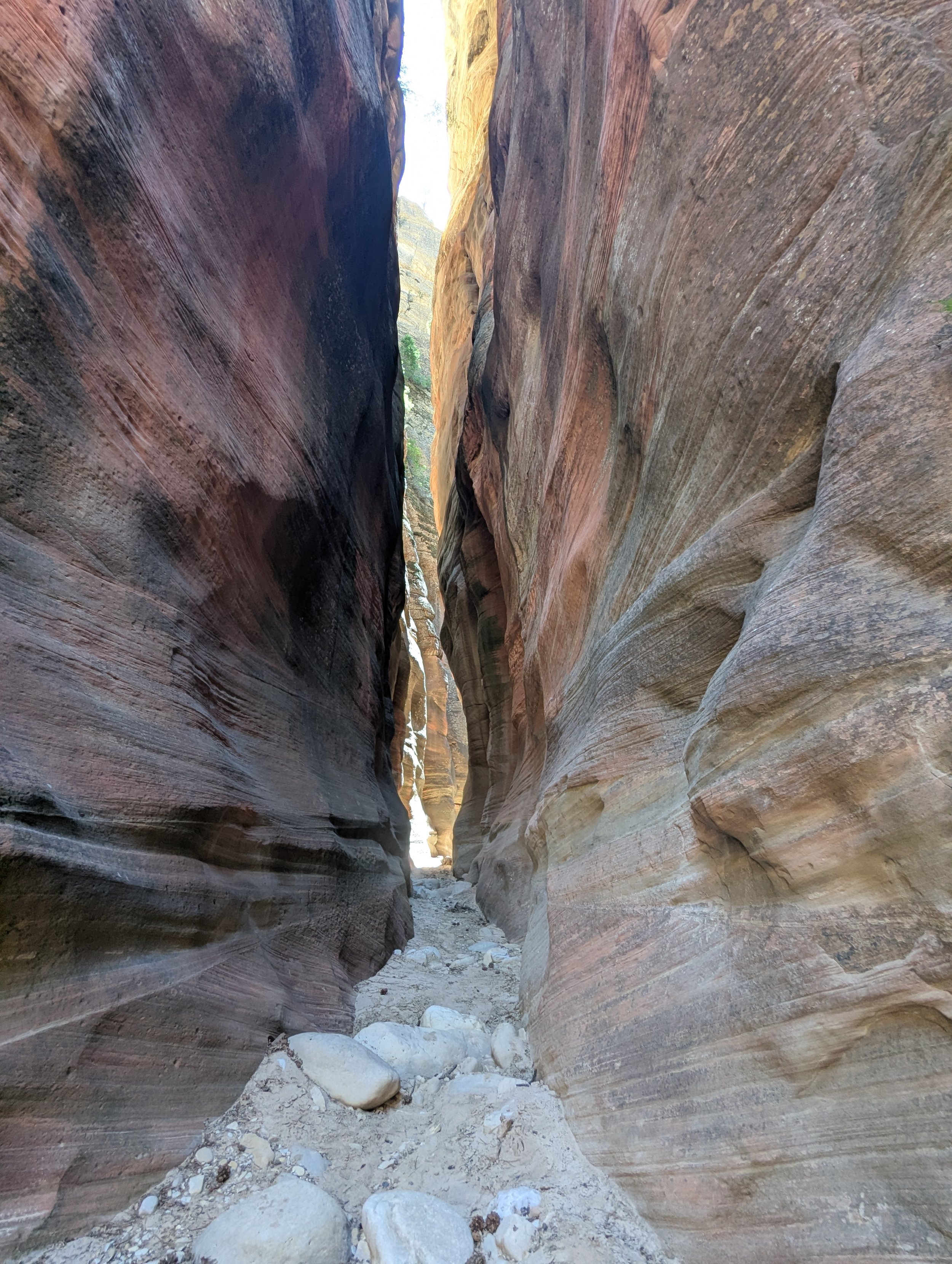
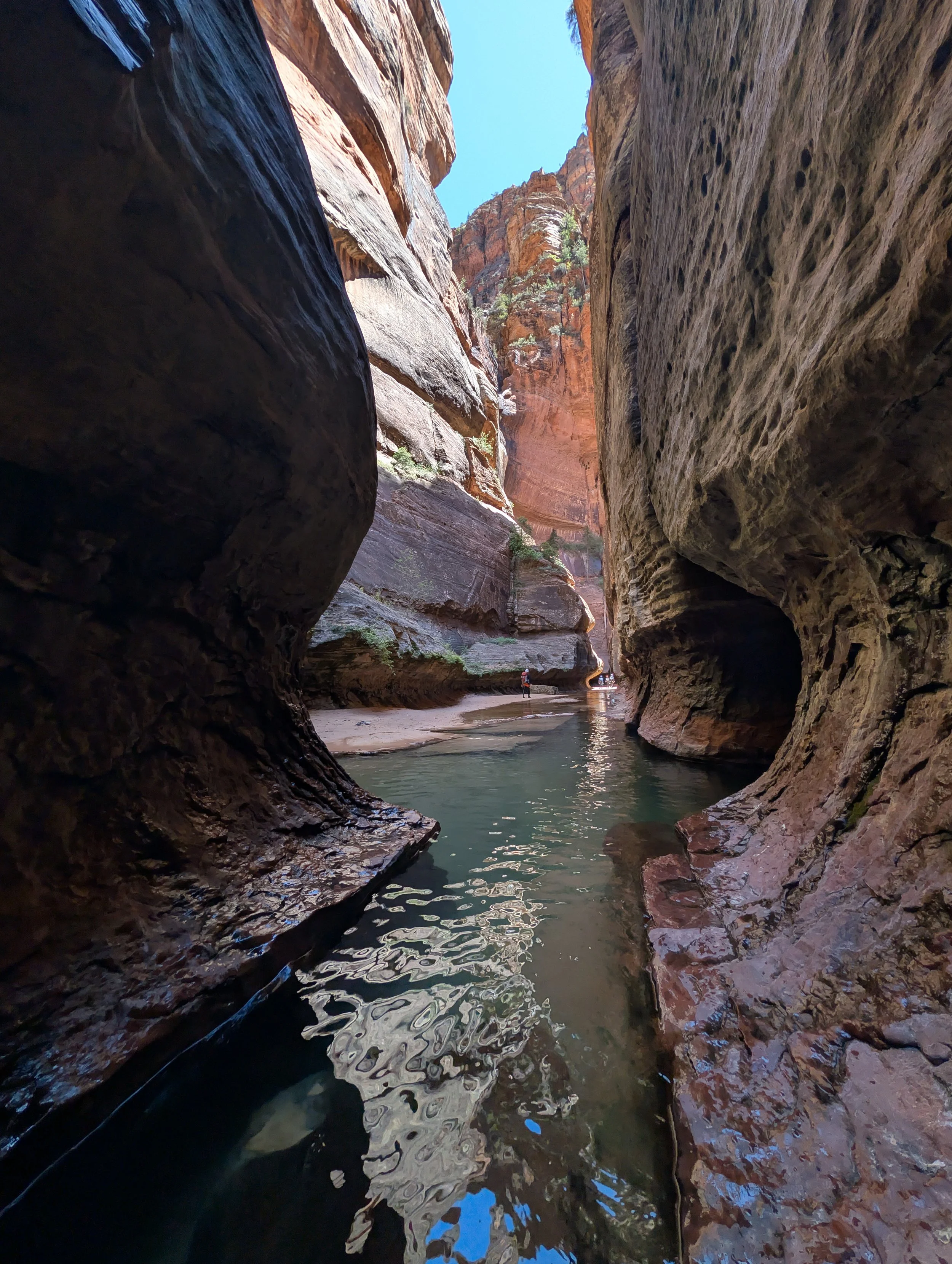
In canyoneering, fear can come from two opposite extremes: the raw exposure of a sheer, 150-foot cliffside drop, or the claustrophobic squeeze of a deep, winding sandstone slot where you can no longer see the sky. Both environments demand a high level of psychological resilience.
As a group coach, the work is to manage the emotional equivalent of this exposure. It’s dangerous and unethical to force people off a cliff, so instead, inviting them to step right up to the edge of their comfort zones is what leads to the most growth. When individual participants take small, brave risks in how vulnerable they are willing to be with each other, it changes the shape of the group. One person’s openness invites the next person's honesty, stepping the entire group into a deeper and safer web of relationship. In this way the coach balances the levels of emotional exposure in a way that lessens anxiety and leads to a far more meaningful collective experience.
Start Together, End Together
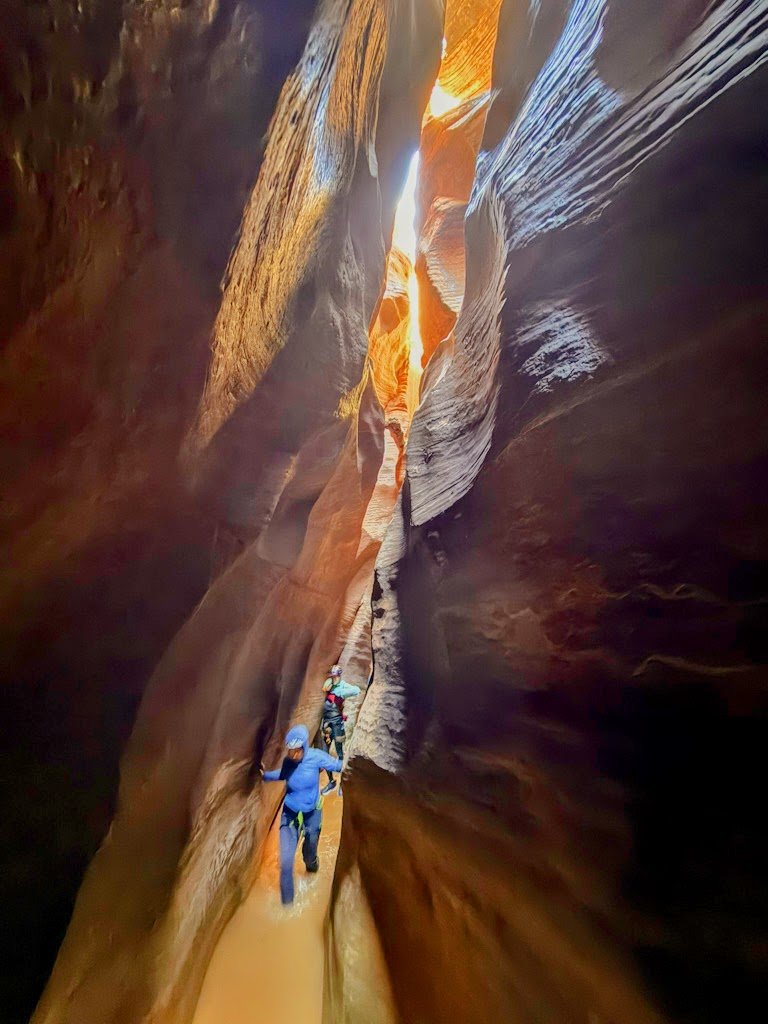
When we intentionally start together and end together, we create critical bookends for the container. The beginning and the conclusion of an experience are potent, liminal thresholds. Marking these moments collectively transforms a simple gathering into a shared ritual, anchoring a deeper sense of purpose and community from the very first minute to the very last.
Every transformative journey requires a clear arc, with a beginning, a middle, and an end. The beginning is about opening to curiosity, setting the tone, establishing safety, and defining the rules of engagement. The middle is the messy, beautiful space of execution, risk, exploration, and play. But the end is where the integration and “meaning making” happens.
By closing the circle with the same collective intention we used to open it, we honor the arc of the experience and emerge transformed. Offering gratitude and outwardly recognizing others for their purpose-level strengths, as well as speaking on meaningful highlights of the experience ensure that we all don't just abruptly scatter back into our busy lives, but instead cross back over the threshold fully integrated, carrying the insights of the group with us into the world.
Whether weaving a container in a board room or in a slot canyon, success depends on inviting the group to push into their edge, focusing on interpersonal safety, rewarding challenge, and joyful presence, alchemizing the friction of the experience into meaningful transformation. We never exit the canyon the same person we went in as.
Part of the work that I am meant to enact in this lifetime is the work of “offering my heart,” and helping others to offer theirs. Practically speaking this is a core power that I carry into how I facilitate and coach groups. Every time we enter into a wilderness space with a sense of gratitude and relationship we can offer our hearts fully to the place and to each other, and that becomes a much needed offering of medicine to the world. ❤️
